
The Efficiency Paradox: $1.6 Trillion Lost


Almost every major industry has been rebuilt in the last fifty years: production lines, retail, logistics, all reinvented. Construction mostly sat it out.
You don't have to take my word for it. The McKinsey Global Institute's "Reinventing Construction: A Route to Higher Productivity", one of the industry's reference texts, puts a number on the problem: construction has averaged just 1% annual productivity growth over the last 20 years, against 2.8% for the global economy and 3.6% for manufacturing. That gap isn't an abstraction to anyone who runs projects. It's the daily grind of rework, waiting, and chasing down information.
The bill for that inefficiency runs to $1.6 trillion a year, roughly the GDP of Canada. So how did the sector that once drove industrialization end up behind even agriculture in the productivity race?
The Missing Link Between Digitalization and Productivity
The productivity problem tracks closely with one thing: how little the sector has digitized. Account for digital tools, digital spend, and the workforce's digital skills, and McKinsey's analysis puts construction at the very bottom of the industrial spectrum.
Figure 1 shows where sectors land on the digitization index. On 2017 data, construction sits second to last, just above Agriculture and Hunting. And even that small comfort is gone: more recent figures (EIB 2021) suggest precision-agriculture technology has pushed farming ahead too, leaving construction as the last analog holdout.
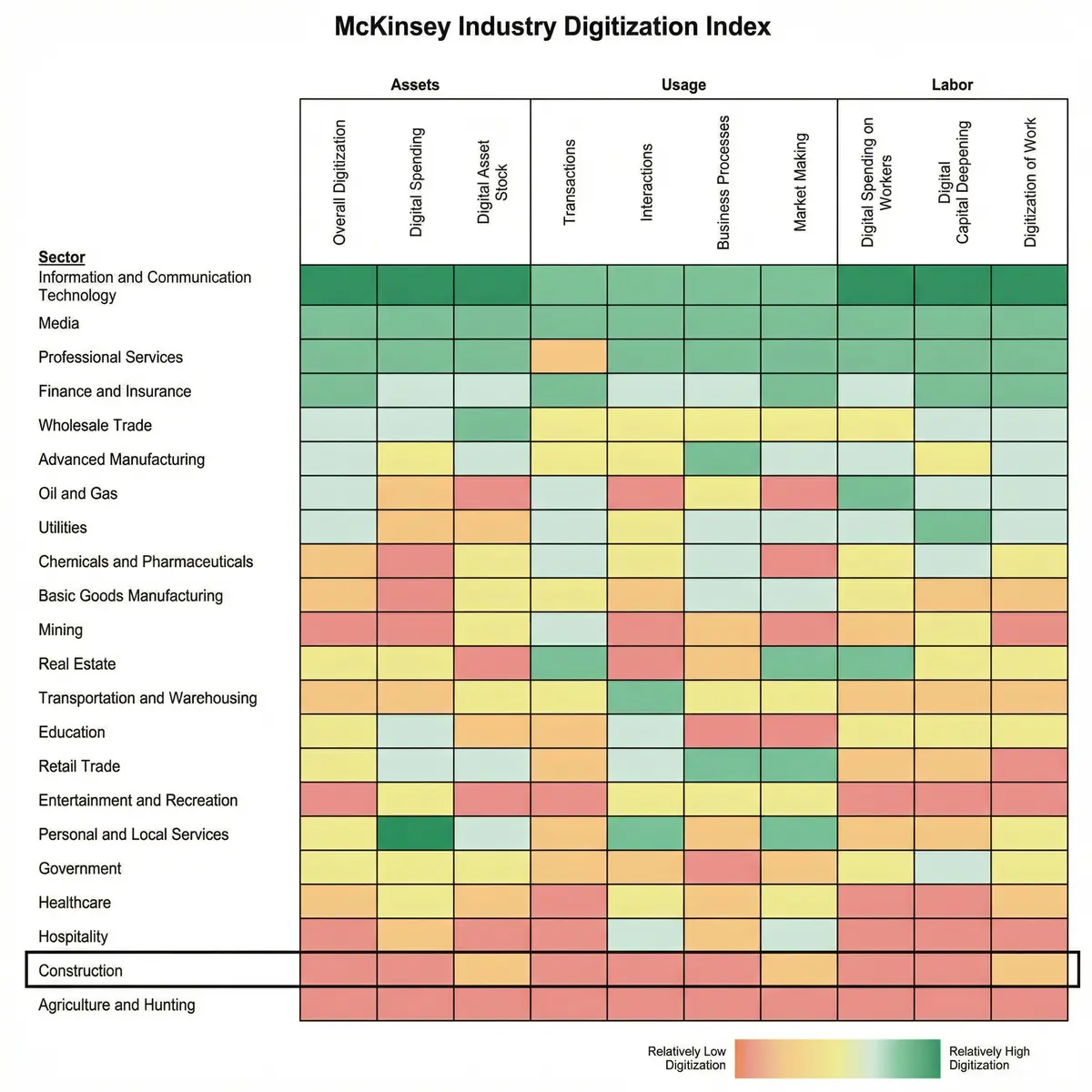
Figure 1: A visualization based on MGI's Industry Digitization Index.
What Figure 1 really shows is the link between digitization and productivity growth. The heavily digitized sectors (information and communication technology, media, advanced manufacturing) keep multiplying their output. Construction keeps paying for its analog habits in stagnation, sometimes outright decline.
Figure 2 makes the correlation explicit: digitization index on the vertical axis, productivity growth on the horizontal. Construction (the orange dot) sits closest to the neutral-to-negative corner on both.
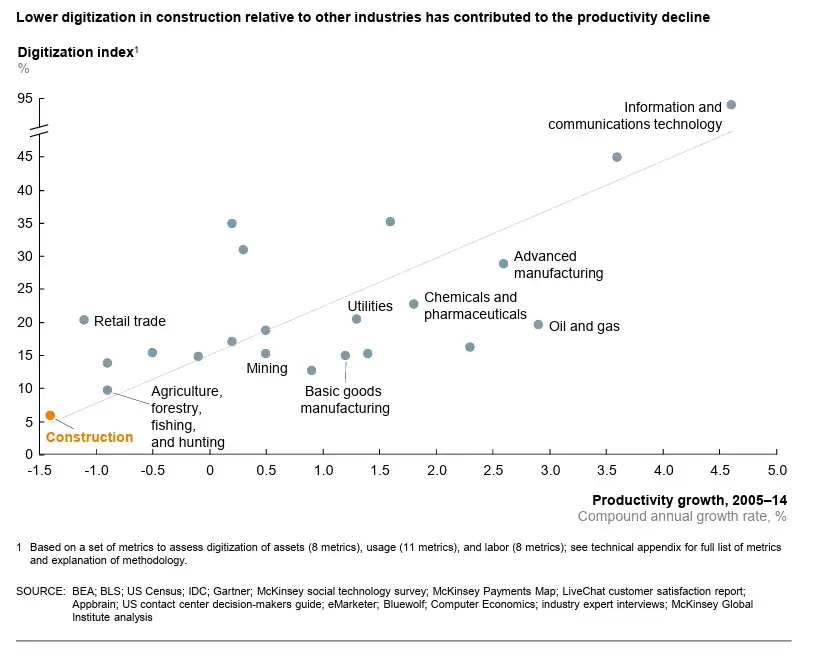
Figure 2: Digitization index - Productivity growth graph.
Root Cause Analysis: Three Structural Factors Locking the Sector
When McKinsey digs into the causes, the headline is that this isn't really a technology problem. The deeper culprits are market failures and structural dynamics: three of them, working together to keep the sector stuck.
1. Extreme Fragmentation and the Scale Problem
Construction is one of the most fragmented industries on earth, both vertically and horizontally. A single project is a chain that runs from the general contractor down through specialized subcontractors (MEP, façade, finishing work), plus material suppliers and design offices, every one of them a separate business.
That fragmentation creates two problems. The first is information loss. Everyone works in their own silo: the design office's data doesn't flow cleanly to the field, the field's doesn't reach the supplier, the supplier's constraints never make it back to the owner. Every handoff degrades or drops something, and you pay for it twice: once in rework, once in the coordination time it takes to catch the gap.
The second is the absence of scale. Because small and mid-size firms dominate, the capital that R&D and technology require never accumulates. A manufacturer can digitize and optimize a supply chain it owns; a construction project is a temporary marriage of dozens of disconnected small firms. And when the partnership dissolves at handover, a serious long-term investment (a full ERP, real BIM integration) looks like an unnecessary cost.
2. Hostile Contracting & Misaligned Incentives
The standard contract models reward protecting your own margin over making the project succeed. The result is a zero-sum game baked into the way deals get struck.
Take risk transfer. The owner tries to push every risk onto the contractor; the contractor bids as low as it takes to win, then claws the margin back through contract loopholes, claims, and change orders. Nobody set out to be adversarial — the incentives just point that way.
Innovation gets punished by the same logic. If a contractor tries a more efficient method and it fails, they eat the entire cost. If it works, the savings usually flow to the owner, or become ammunition to squeeze the price on the next tender. Heads the owner wins, tails the contractor loses. So the rational move is to stay conservative and keep doing it the way you've always done it.
3. Bespoke Requirements and Lack of Standardization
The article of faith in construction is that "every project is unique." And sure, ground conditions, local codes, and client demands genuinely differ. But McKinsey's analysis says most of what a project actually involves is repetitive and standardizable. The uniqueness is a lot smaller than the industry likes to believe.
So manufacturing runs lean and turns out millions of units to the same spec, while construction treats every job as a prototype built from zero: design, supply chain, field operations, all reassembled from scratch each time. The deeper cost is memory. Without standardization there's no institutional memory: the hard-won lessons of one project don't carry to the next, because the next one is "unique" too. The wheel gets reinvented on every site.
The upside of starting from rock bottom is that there's nowhere to go but up, and the room to climb is enormous. Done right, digitization can cut construction costs by up to 15% and project schedules by 30%.
Solution: "Project Operating System" and Single Source of Truth
The report's most useful proposal is that construction needs to move to "Project Operating Systems." Not more robots or futuristic gadgets. The sector needs an infrastructure that turns messy field activity into data people can actually act on.
One of the biggest levers, McKinsey argues, is a Single Source of Truth (SSOT): one place where the project's data actually lives.
Today it lives nowhere and everywhere: scattered across Excel sheets, WhatsApp groups, email threads, and site notebooks. When you can't trust whether a number is the current one, decisions stall. A site manager burns 30% to 40% of the day just hunting for information or double-checking whether it's right.
YAPL: Simplifying Singularity
We built YAPL to close exactly this gap. The goal was never another sprawling software stack for project managers to wrestle with; it was one simple place that holds a project's time and resource management together. It sticks to what it's good at, planning and resource management, and answers the three chronic problems above head-on:
- Operational integrity (against fragmentation). Teams and subcontractors work off one central, current schedule instead of their own isolated programs and Excel files. The "who's supposed to be where, and when" confusion that fragmentation breeds mostly disappears.
- Transparency in resource management. Most of the "hostile" friction on site comes from resource conflicts: missing equipment, double-booked crews. YAPL makes it explicit which resource is committed to which task, so expectations rest on data instead of guesswork.
- Dynamic planning (field and office in sync). Instead of a static plan that's out of date by Tuesday, the schedule stays live. Management sees where the project actually is, with current data, and moves resources in time. That's proactive management, not reading a post-mortem after the fact.
Conclusion: The Cost of Inaction
Construction is at a fork. One road is the familiar one: rising material costs, a shrinking skilled workforce, thinning margins, and inefficiency shrugged off as "the nature of the business." The other is a digitized future McKinsey estimates could lift productivity by 50% to 60%.
For any firm that wants a slice of that $1.6 trillion, or just wants to hold the market share it already has, digitization has stopped being an "IT line item" and become a question of whether you're still standing in ten years.
Agriculture pulled off its productivity revolution by connecting tractors to satellites. Construction's will start by connecting the field to data.
References:
- McKinsey Global Institute, "Reinventing Construction: A Route to Higher Productivity", February 2017.
- U.S. Bureau of Labor Statistics (BLS) Data, 1947-2010 Productivity Trends.
- Construction Industry Institute (CII) Benchmarking Data.
- EIB Investment Survey 2021 - Digitalisation in Europe.
Tired of losing time to scattered data? Start your free trial with YAPL today and put a single source of truth to work on your next project.
Related Articles

Ready to Improve Your Project Management?
Try YAPL free for 14 days and put these insights into practice.
Start Free Trial